Quick commerce's dark-store race is quietly reshaping MMR warehousing
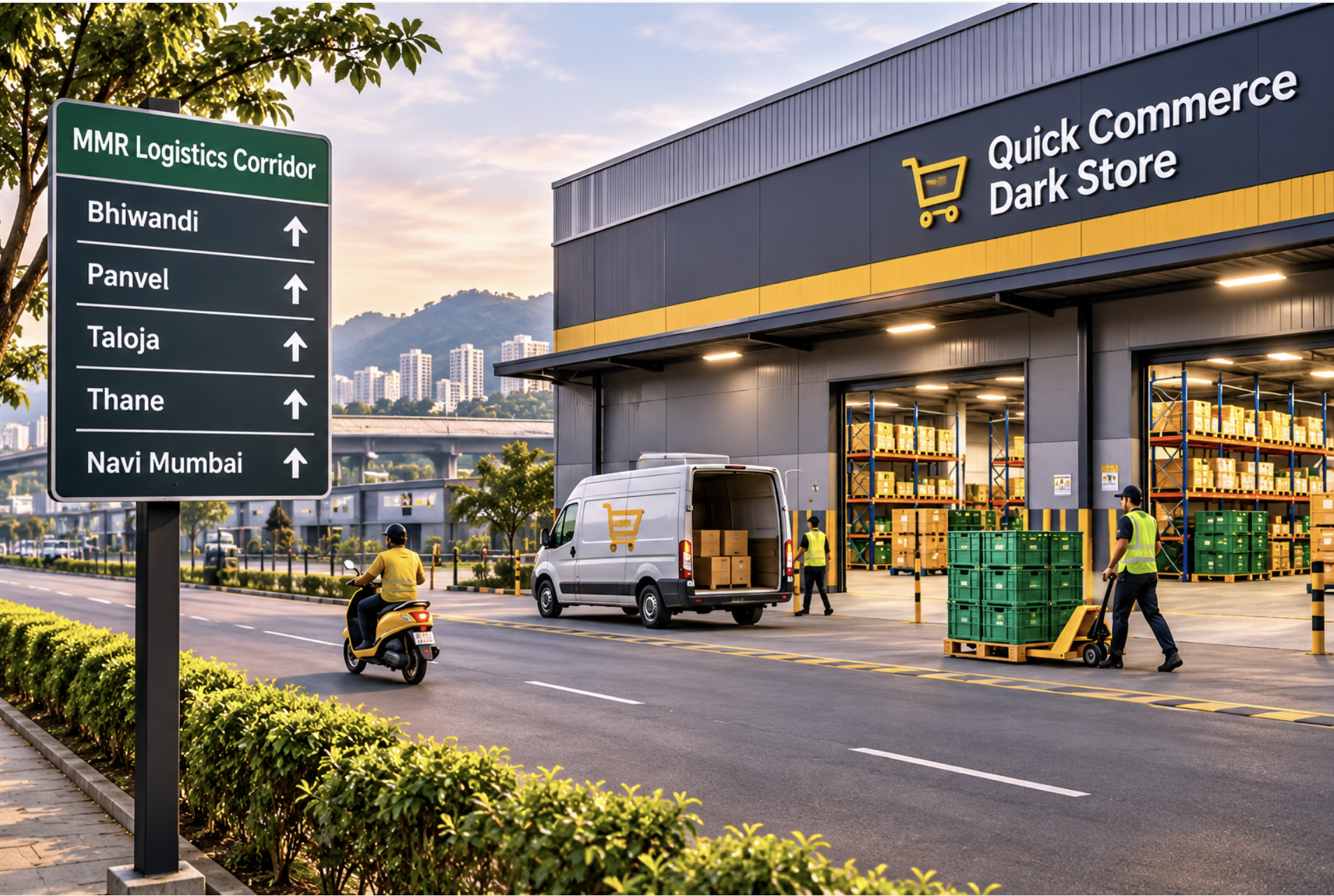
Quick commerce's appetite for urban logistics space is turning into one of the more durable demand stories in Indian warehousing, and Mumbai's fringe belt is where that story gets written most visibly. The directional signal is simple: dark stores are multiplying across the MMR, and the space they need is no longer a niche corner of the industrial market — it is becoming a mainstream leasing category.
For a Mumbai buyer or investor, the relevance is straightforward. Land and built-up space in the city's logistics corridors — Bhiwandi, Panvel, Taloja, parts of Thane and the Navi Mumbai belt — has historically been an institutional and developer-led game. What quick commerce has done is compress the demand cycle: instead of large-format warehouses leased on long tenures, the market now absorbs smaller, better-located, faster-to-commission facilities. That changes the tenant profile and, over time, the exit assumptions.
It also changes how we read the residential-versus-commercial debate. A Mumbai investor comparing a mid-segment flat in the suburbs with a warehousing or dark-store-linked asset in the MMR is no longer comparing a yield play with a speculative one. Organised logistics has visible occupiers, contractual escalations and, increasingly, institutional buyers at exit. The caveat is location discipline — not every godown on the fringe qualifies, and the difference between a Grade A facility and a shed is the difference between an asset and a liability.
On the ground, the pressure is showing up as competition for land in the right micro-markets rather than as a uniform boom. Where connectivity to the city's consumption clusters is strong, land values and rentals have firmed; where it is weak, vacancy persists. That divergence is the real story, and it will separate serious logistics investors from the momentum-chasers.
Sandeep's take: I have watched Mumbai's warehousing market move from a backwater to a boardroom topic, and quick commerce has accelerated that shift. My advice to clients is unchanged in spirit: buy the location and the tenant, not the headline. A dark-store-linked asset in the right MMR corridor can be a genuine income play, but only if the facility is Grade A, the lease is real, and the exit has more than one possible buyer. Treat the sector's growth as a tailwind, not a guarantee.
What to watch next: MahaRERA and local body approvals for dark-store conversions, and whether organised logistics leasing in the MMR continues to outpace fresh Grade A supply in the Bhiwandi–Panvel–Taloja belt.